Aho Great Spirit
Lupuna Blanca — Ceiba pentandra Powdered Bark
Lupuna Blanca — Ceiba pentandra Powdered Bark
Couldn't load pickup availability
Lupuna Blanca — Ceiba pentandra
Powdered Bark
The King of all master trees. The Emperor of the Amazon. The Master of the Masters.
The Lupuna is a magical tree, and is considered one of the greatest master trees of the jungle. The spirit of the Lupuna tree is known as the Master of the Shamans — the Master of the Masters. Inside the Lupuna are said to dwell many spirits of plant teachers and master trees of the jungle. That is why it holds such an extraordinary place within Amazonian tradition. When you learn from the Lupuna, you must be willing to become part of the guardianship of the forest — to conserve, protect, respect and love nature.
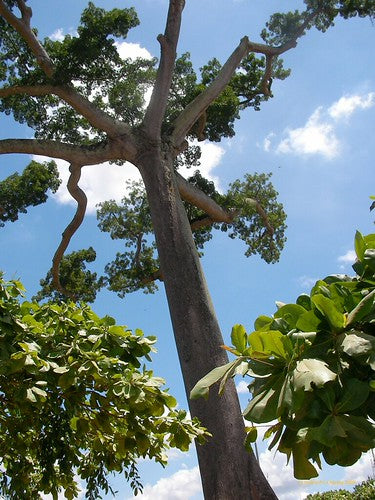
Lupuna Blanca — also known as the Kapok Tree — is one of the largest trees in the Amazon rainforest, growing to extraordinary heights of up to 200 feet in the jungle. It is instantly recognisable: its enormous trunk is supported by vast buttress roots that radiate from the base like the walls of a cathedral, while its canopy spreads high above the surrounding forest.
This is not simply an enormous tree. Within the traditional plant knowledge of the Peruvian Amazon, Lupuna holds an exceptional position. Lupuna Blanca and Puka Lupuna are regarded by traditional healers as among the most important master trees, and working with these trees forms part of some of the deepest and most demanding traditional dieta practices.
The Spirit of Lupuna Blanca
The spirits of the master trees may appear in the form of animals, men, women, spirit beings, or as abuelo — grandfather — spirits. Lupuna Blanca, the great Ceiba tree, is regarded as an abuelo of the forest.
Lupuna Blanca reminds us of the strength and courage that naturally lies within us — particularly when we reach a crossroads, face life-changing decisions, or move through periods of challenge, growth and transformation. Negative thoughts and limiting beliefs can make us feel small, contracted and unable to see beyond the boundaries of what is familiar.
This is where the traditional teachings surrounding Lupuna Blanca become particularly powerful. The presence associated with this tree is not described as subtle — it is vast.
There is something deeply symbolic in a being that can stand in the jungle for centuries, rooting itself deeper into the earth while growing higher and wider than almost everything around it. Lupuna embodies rootedness, vertical strength, endurance and the capacity to remain standing through immense change.
In Amazonian shamanic traditions, the largest trees of the forest, including the Ceiba, have long been associated with protection. The Lupuna can be understood as a living fortress — an immense tree believed to hold relationships with numerous other plant and forest spirits within its domain.
One of the most important aspects of traditional dieta with master trees is the teaching that may occur through dreams and other experiences during periods of isolation and disciplined practice. Within these traditions, plants and trees are understood as teachers capable of transmitting knowledge, medicine, icaros and sacred songs to the person undertaking the dieta.
Traditional Uses
Lupuna Blanca is found across tropical regions of the Americas, Africa and Asia, and different parts of Ceiba pentandra have a long history of use within traditional medicine systems.
Within Amazonian folk traditions, the bark has historically been prepared in forms such as decoctions and infusions. Its ethnobotanical uses have included preparations associated with digestive complaints, respiratory conditions and general physical wellbeing.
Beyond these physical applications, Lupuna Blanca holds a much deeper ceremonial importance within Amazonian traditions.
It is traditionally associated with strength, protection, clearing unwanted energies and the transmission of shamanic knowledge. Among those undertaking traditional training, Lupuna may be dieted for extended periods — sometimes many weeks or months — placing it among the more serious master-tree dietas of the Peruvian Amazon.
The powdered bark offers the plant in a simple, minimally processed form, preserving the connection to the part of the tree traditionally collected and worked with.
About Our Powdered Bark
Our Lupuna Blanca Powdered Bark is produced from carefully dried Ceiba pentandra bark that has been finely milled into a versatile botanical powder.
Unlike a tincture or glycerine extract, nothing has been extracted into a liquid medium. This is the plant material itself — dried and powdered, without alcohol or glycerine.
The bark is sourced directly from trusted partners in the Amazon with an emphasis on responsible sourcing and respect for the tree, the forest and the traditional knowledge surrounding it.
Powdering the dried bark makes it easier to store, measure and work with while retaining the character of the original botanical material.
For those interested in Amazonian ethnobotany and the traditional master trees of the rainforest, Lupuna Blanca represents one of the most remarkable species in the collection.
A Monumental Amazonian Master Tree
Few plants communicate the scale and presence of the Amazon quite like Lupuna Blanca.
Its immense buttress roots, towering trunk and canopy rising above the surrounding forest have made the Ceiba a powerful symbol throughout the tropical regions in which it grows. Within the Peruvian Amazon, that physical presence is inseparable from the spiritual importance attributed to the tree.
Lupuna is associated with strength, protection, endurance and profound knowledge — qualities reflected in a tree capable of standing over the forest for generations.
For collectors, ethnobotanical researchers and those exploring the traditional plant knowledge of the Amazon, powdered Lupuna Blanca bark offers the raw botanical material in one of its simplest forms.
Important
Sold for ethnobotanical, botanical and research purposes.
This product is supplied as raw powdered botanical material and is not sold as a medicine. Information regarding traditional preparations and historical uses is provided for educational and ethnobotanical context only.
Not intended to diagnose, treat, cure or prevent any medical condition.
Share